
Many buildings don’t actually measure airflow. They estimate it. A static pressure reading in a duct, a fan’s speed, or a damper’s position gets used as a stand-in for how much air is moving, and the building automation system controls to that estimate. For a few weeks of the year, the estimate might be close. During the seasonal transitions in spring and fall, it often isn’t, and that’s when building performance and ventilation control start to slip.
This guide explains how airflow gets inferred, why those estimates drift, and why a dedicated airflow measuring station gives the BAS something far more reliable to work with.
How Buildings Infer Airflow
There are a few common shortcuts. Some systems use duct static pressure combined with fan speed to estimate volume. Others use damper position, assuming a damper that’s 30 percent open delivers a predictable amount of air. Outside air is often calculated from mixed air, return air, and outside air temperatures. Each method relies on the system behaving the same way it did when the relationship was first set up.
Why Inferred Airflow Drifts
An air system’s behavior changes constantly. Filters load and add resistance. Dampers modulate. Economizers open and close. Wind and stack effects push against outside air intakes differently depending on the weather. Every one of these changes alters the relationship between pressure, fan speed, damper position, and actual airflow. An estimate that was accurate at startup can be meaningfully off a few months later, and nothing in the BAS will flag it, because the system has no independent measurement to compare against.
Why Season Changes Expose the Problem
The Mixed Air Temperature Method Breaks Down
Calculating outside air from temperatures depends on a clear difference between outside air and return air. In the shoulder seasons, those temperatures can be within a few degrees of each other, and the calculation loses its accuracy right when the building is transitioning between heating and cooling modes.
Economizer Transitions Shift the System
As outdoor temperatures swing, economizers move between minimum outside air and full free cooling, sometimes several times in a single day. Each shift changes duct pressures and the relationship between damper position and actual flow, which means inferred values are working from assumptions that no longer hold.
Ventilation Minimums Still Have to Be Met
Through all of this, the building still needs to meet the minimum ventilation rates set by ASHRAE Standard 62.1. If outside airflow is inferred, there’s no reliable way to confirm those minimums are being met during the seasons when conditions change the most.
What an Airflow Station Does Differently
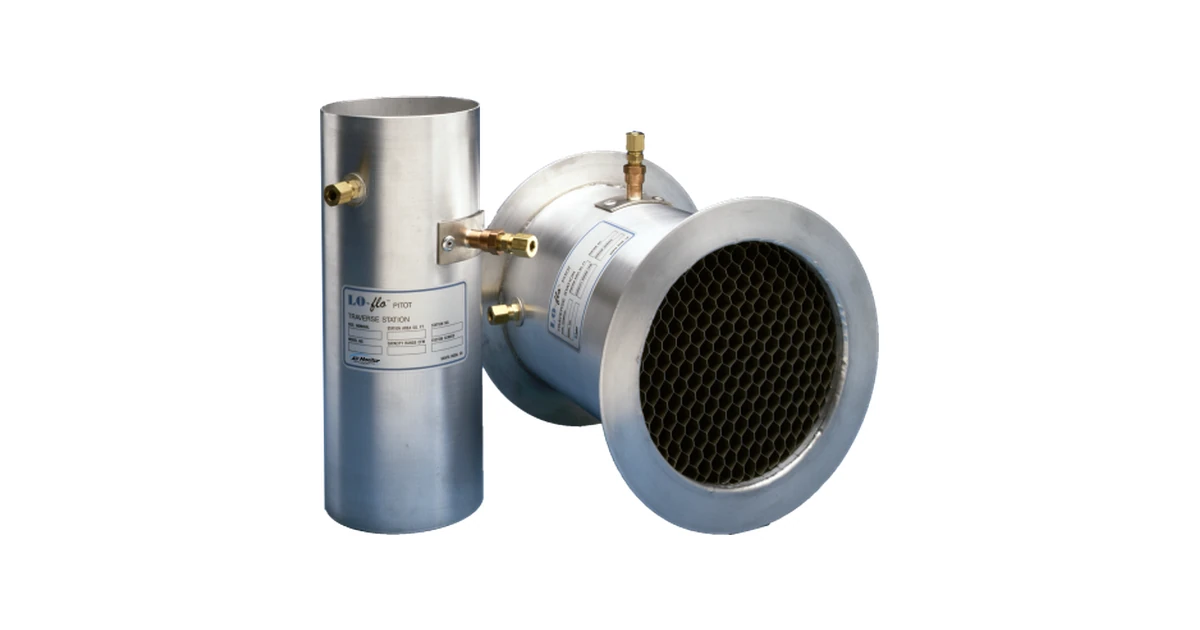
An airflow measuring station, or AFMS, measures airflow directly in the duct or at the intake. Instead of assuming what the system is doing, it reports what the system is doing, regardless of filter loading, damper position, or outdoor conditions. Quality stations, such as those from Air Monitor, are built to hold their accuracy across the full operating range, and products certified through AMCA’s Certified Ratings Program have had their published performance independently verified.
What Measured Airflow Means for BAS Control
When the BAS controls to a measured value, the control sequence works the way the engineer designed it. Outside air dampers can be modulated to hold an actual CFM setpoint instead of a position. Supply and return fans can be tracked to maintain building pressure based on real flow. Facility teams get trend data they can trust, which makes it far easier to diagnose comfort complaints or energy spikes. For a broader look at the energy side, see our guide to [airflow monitoring](LINK ONCE LIVE).
Where to Start
If a building can only add one measurement point, outside air is usually the place to start. It has the biggest effect on both ventilation compliance and heating and cooling load, and it’s the flow most likely to be affected by changing weather. Our team can help evaluate where measurement will have the most impact. See our airflow measurement and outside air control applications, or request a quote to talk through your system before the next season change.
Frequently Asked Questions
What does it mean to infer airflow?
Inferring airflow means estimating it from another value, such as duct static pressure, fan speed, damper position, or a temperature calculation, rather than measuring the actual volume of air moving through the system.
Why is inferred airflow less accurate during season changes?
During spring and fall, outdoor and return air temperatures are often close together, economizers shift modes frequently, and duct pressures change. Each of these breaks the assumptions that inferred airflow depends on.
What is an airflow measuring station?
An airflow measuring station, or AFMS, is a device installed in ductwork or at an air intake that directly measures the volume of air moving through it and reports that value to the building automation system.
Can an AFMS help meet ASHRAE 62.1 ventilation requirements?
Yes. Measuring outside airflow directly allows the BAS to control to an actual CFM value, which is the most reliable way to confirm minimum ventilation rates are being met under changing conditions.
Where should a building install its first AFMS?
Outside air is typically the highest-value location, since it directly affects ventilation compliance, heating and cooling loads, and is the airflow most influenced by weather.